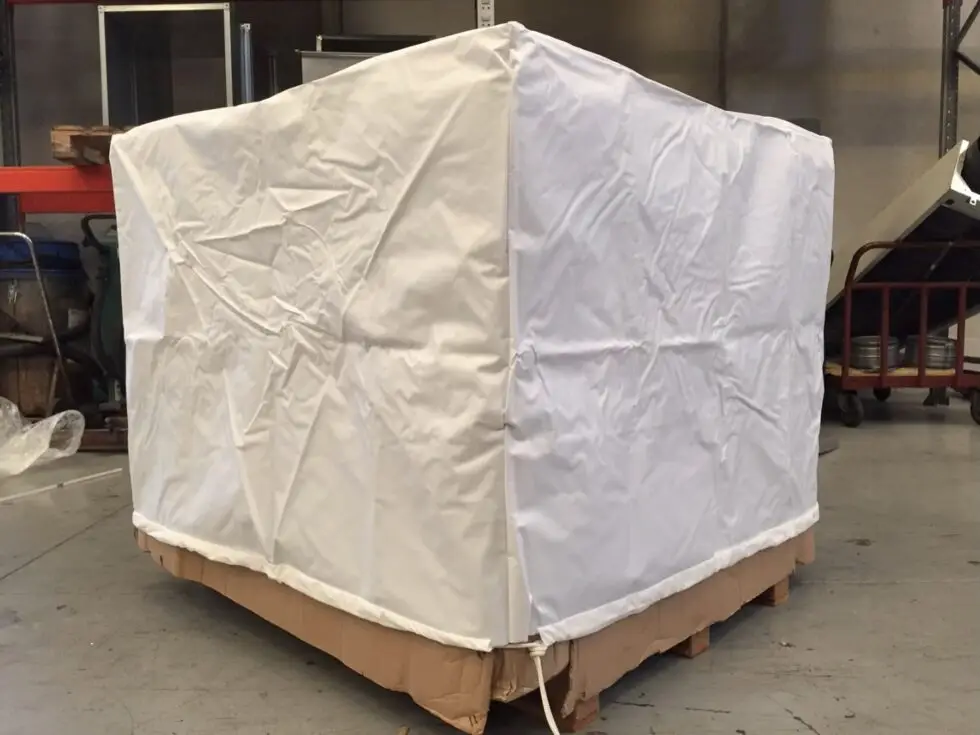
Evaporative (or adiabatic) coolers are the ideal solution for those seeking efficient, environmentally friendly and economical thermal comfort during the warm months. Taking advantage of the natural process of water evaporation, they provide a cooler, healthier environment with minimal energy consumption and without the use of polluting refrigerant gases.
However, as winter approaches, these valuable machines, especially those installed outdoors or in unheated rooms such as sheds, become vulnerable to adverse weather conditions. Leaving a cooler exposed to the winter weather without adequate protection is a mistake that can cost dearly in terms of damage, repair costs and, most importantly, reduction in the useful life of the unit.
The cold, humidity and weather typical of winter pose a serious threat to the structural and functional integrity of coolers.
The most effective and professional preventive measure is the use of protective canopies specifically designed for evaporative coolers. These are not just tarps, but technical covers made to insulate the unit by creating a complete barrier against the elements.
A proper winter cover not only protects the external envelope, but also prevents cold, moist air from entering through the unit, an especially important factor for stationary coolers that have an opening to the inside of the building.
When choosing a protective canopy, the critical factor is not just the size, but the quality and technical properties of the material used. In order for the protection to be truly effective, the canopy must be made of materials with the following basic characteristics:
The primary function of a winter canopy is to prevent water (rain, melted snow or moisture) from penetrating and stagnating on the cooler.
A good canopy must be air resistant (windproof) to prevent strong gusts from tearing the cover or moving the unit, but it is critical that it also be slightly breathable or allow minimal ventilation.
Important: Overly airtight protection can trap residual moisture inside the unit, leading to condensation and, in the worst cases, the growth of mold or rust. High-quality canopies are designed to be impervious to rain, but to allow internal condensation to gradually evaporate.
Protecting your evaporative cooler with a winter canopy made of durable, water-repellent materials is not an expense, but a smart investment that will safeguard its efficiency, prevent costly breakage due to freezing, and greatly simplify restarting in the spring.
Plan to secure your adiabatic system before the first frosts arrive!