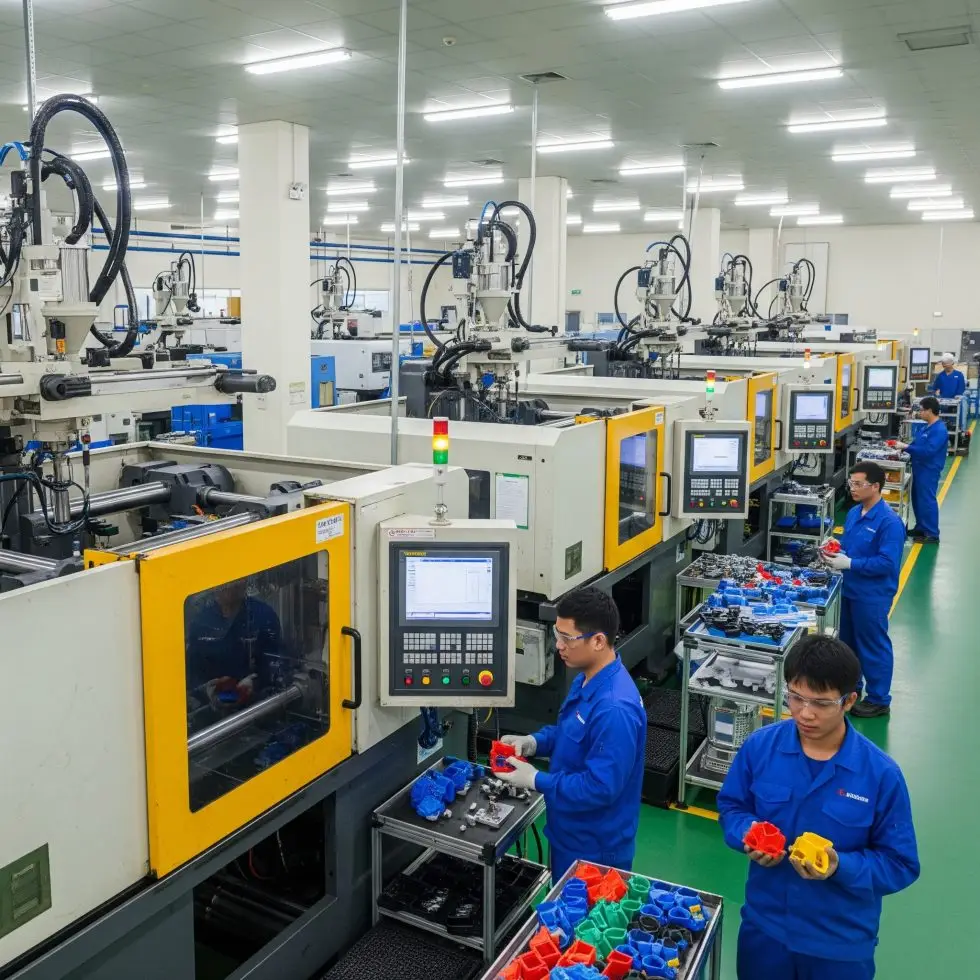
Plastics industries, particularly those producing masterbatch and those dedicated to molding plastics, continue in environments where temperature and air quality control is more than a comfort-it is a strategic necessity.
The heat generated by machinery, extrusion and molding processes, along with the possible presence of odors or fumes, creates a microclimate that can compromise production efficiency, worker health and even the quality of the final product.
In this context, adiabatic evaporative cooling emerges as the ideal solution, offering tangible benefits that go far beyond simple air conditioning. It is not just about lowering the temperature, but about creating an optimal working environment that supports every stage of the production process.
The first and most obvious benefit of adiabatic cooling is the dramatic improvement of the indoor microclimate. Temperatures can reach high levels, making the environment untenable for operators.
Adiabatic systems constantly bring in 100 percent fresh air from outside, lowering the perceived temperature by many degrees Celsius. This not only increases worker comfort, but also reduces the risk of heatstress, fatigue and heat stroke, which can lead to accidents or lapses in alertness.
This renewed comfort translates directly into increased productivity. An operator working in a cool, pleasant environment is more focused, energetic and efficient. Reduced fatigue and worker safety receive a significant boost.
Excessively hot environments can cause dehydration, dizziness and fainting, increasing the risk of operational errors with complex machinery. A controlled, cool climate helps keep workers alert and responsive, reducing the likelihood of injury.
A crucial aspect, often underestimated, is air quality in industrial environments. In masterbatch and molding companies, although there are specific extraction systems for fumes and odors from machinery, general air exchange can be insufficient.
Adiabatic cooling solves this problem by introducing constant, natural air exchange. Unlike traditional air conditioning systems that recirculate indoor air (which is often stale and saturated with pollutants or odors), adiabatic coolers take fresh air from outside, filter it, and inject it into the environment.
This continuous flow of clean air ensures not only a reduction in temperature, but also a constant elimination of dust, residual odors and potentially harmful substances, helping to maintain a healthier and more hygienic work environment.
Forced and controlled air exchange is essential for the respiratory health of operators and for the dispersion of any microparticles or volatile compounds that may be generated during production processes.
Cleaner air improves the perception of the work environment, contributing to greater overall well-being and reducing the risk of irritation or long-term respiratory problems for personnel.
In addition to direct benefits for personnel, implementing adiabatic cooling in plastics industries leads to significant operational and economic benefits:
Implementing an evaporative adiabatic cooling system in a masterbatch or plastics molding industry is not just a cost, but a strategic investment in employee well-being, operational efficiency and machinery longevity. It means transforming a potentially hostile environment into a more comfortable, safe and productive workplace.
Choosing the ideal climate for your production means protecting staff , optimizing processes and ensuring a more efficient and sustainable future for your company.
Contact us for a personalized consultation and a free inspection!